

Spain Requires Gamblers to Deposit and Withdraw in Their Own Name

Spanish-licensed gambling sites must check every payment method is in the player's own name, and older accounts have until 28 April 2027.
Key facts
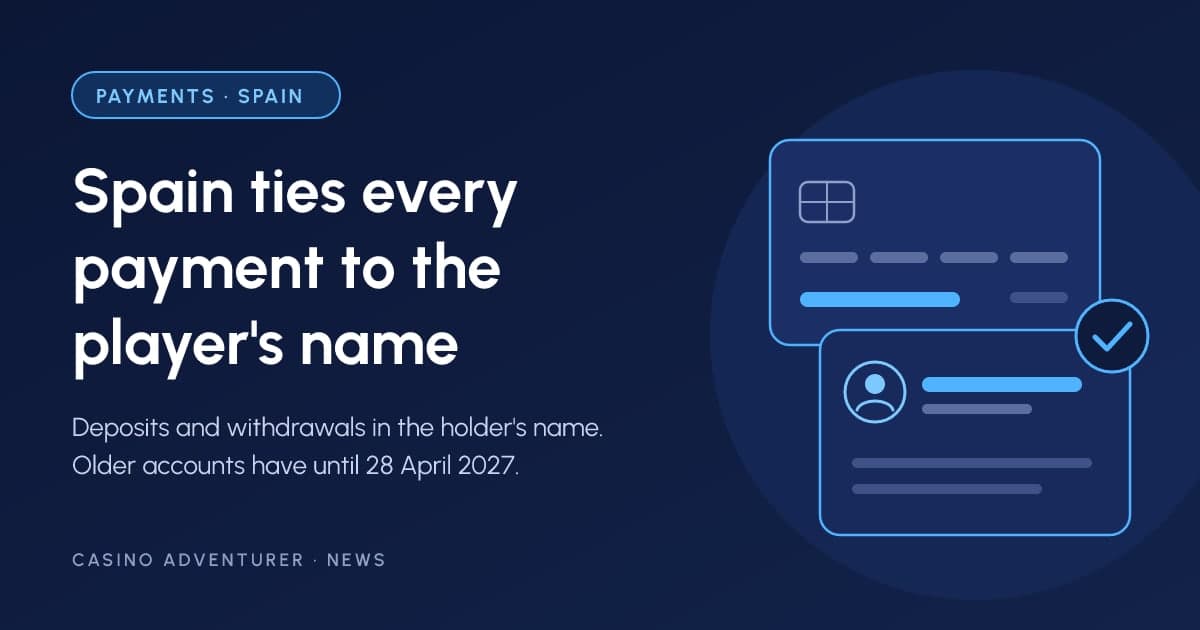
Spain now requires every online gambling operator with a Spanish state licence to check that each payment method a player uses to deposit or withdraw is in the player's own name. The rule took effect on 28 October 2026.
- The account holder and the holder of each card, bank account or e-wallet used for deposits and withdrawals must be the same person
- The legal basis is Royal Decree 813/2026, published in Spain's official gazette on 8 October 2026
- Accounts opened from 28 October 2026 are covered from the start
- Older accounts have until 28 April 2027, and their winnings cannot be withdrawn until the check is done
- Identity theft complaints in Spanish online gambling rose 12% in 2025, to 8,675
What does Spain's new payment rule say?
The rule comes from Royal Decree 813/2026 of 7 October, which updates several financial-sector regulations at once. It was published in the Boletín Oficial del Estado on 8 October and took effect 20 days later, on Wednesday 28 October.
For gambling, the decree rewrites article 21.2 of the regulation under Law 10/2010, Spain's law against money laundering and terrorist financing. When an operator checks a customer's identity online, it must now also check "that the holder of the payment method used in deposits and withdrawals is the holder of the gaming account", in the decree's words (our translation).
Before the change, that article left the identity rules for gambling operators to the Dirección General de Ordenación del Juego (DGOJ), Spain's gambling regulator, which set them when it granted licences. The decree writes the payment check into the regulation itself, so it binds every licensed operator.
Its preamble says the change should end "unwanted effects" that the old rules had brought. The decree also partly brings EU Directive 2024/1640, on national anti-money laundering systems, into Spanish law.
The Ministry of Social Rights, Consumer Affairs and Agenda 2030, which the DGOJ belongs to, announced the start on 28 October. It says the rule applies to online gambling operators with a state licence.
What changes when players deposit or withdraw?
Every way money moves into or out of a gambling account has to carry the account holder's name. Once the rule applies to an account, a partner's card, a parent's bank account or a friend's e-wallet will not pass, for deposits or for withdrawals.
Accounts opened since 28 October 2026
New accounts are covered from the day they open, the ministry says. The operator has to confirm that each payment method a player adds belongs to that player.
Accounts opened before 28 October 2026
Players who registered earlier have six months, until 28 April 2027, to make the changes that let the operator run the check.
Until the check is done, they can keep depositing with the payment methods they already use and keep playing. They cannot withdraw winnings.
If the match is still not confirmed when the six months end, the operator must close the account and report it to the DGOJ. It then returns the balance, including any winnings it held back, subject to its anti-money laundering duties.
What should players check now?
- Use only cards, bank accounts and e-wallets registered in your own name
- Make sure the name on each method matches the name on your gambling account
- Replace any shared or borrowed method before you plan to withdraw
- Answer the operator's verification request early, not at cash-out time
The decree says what must be checked but not how, so the proof asked for may differ from one operator to the next.
Why is Spain doing this?
The government's main target is identity theft. Complaints about identity theft in online gambling rose 12% in 2025, the ministry says, and its protocol for impersonated taxpayers recorded 8,675 of them that year.
That protocol, PACS, deals with the damage that shows up at tax time. The DGOJ describes it as help for people whose identity others used to gamble online, and who then find gambling winnings they do not recognise in their tax data or receive a tax inspection notice about them.
According to the ministry, the DGOJ's data showed that impersonators relied on payment methods whose holder is hard to verify in real time, such as bank cards and e-wallets.
The ministry adds that the problem goes beyond isolated or family cases and can point to criminal organisations linked to money laundering. Requiring the same name on the account and on every payment method makes an account opened with someone else's identity harder to use.
For players, the check also works as a lock: money can only leave a gambling account to a payment method in the account holder's name.
Checks on who owns the money are spreading across gambling payments. Our look at how fintech is reshaping iGaming payments covers the fraud checks now built into casino cashiers, and Request Network's wallet screening checks a crypto wallet before a deposit moves.
What happens next?
Operators get the same six months to adapt their technical systems. In practice, iGaming Business notes, they need a dependable way to confirm the name behind every card, bank account and e-wallet, for money going in and coming out.
Jdigital, the Spanish digital gambling association, has asked the authorities for a guide on how to apply the rule, iGaming Business reports, citing the trade site Sector del Juego. The trade title also warns that holding back withdrawals while checks run could bring more player complaints.
The April deadline lands a month after another change for players in Spain. From 26 March 2027, the DGOJ's joint deposit limits take full effect: by default €700 a day, €1,750 a week and €3,300 over four weeks, counted across every licensed operator a person uses.
Players can lower, raise or remove those limits, but a change takes three working days and a limit can only go up once every three months, the DGOJ says. Its new Portal del Jugador shows a player's online gambling across licensed operators and helps them spot whether someone has used their identity.
Frequently Asked Questions
No. Since 28 October 2026, operators licensed in Spain must check that the holder of every payment method used to deposit or withdraw is the account holder. A card, bank account or e-wallet in another person's name fails that check, even with their consent. An account opened before that date can keep depositing with the methods it already uses until 28 April 2027, but cannot withdraw winnings until the check passes.
Not until the operator has confirmed that your payment method is in your own name. You can keep depositing with the methods you already use and keep playing in the meantime. The deadline for the check is 28 April 2027.
The operator must end your contract, tell the DGOJ and return your balance, including winnings it held back during the six months. The refund remains subject to the operator's anti-money laundering checks.
The decree speaks of the payment method used for deposits and withdrawals and does not list types. The ministry names bank cards and e-wallets as methods impersonators relied on, so expect both to be checked.
Online gambling operators with a Spanish state licence, the ministry says. Sites without a Spanish licence may not offer gambling to players in Spain at all, according to the DGOJ.
Daniel Kovacs is a seasoned online casino reviewer known for his analytical approach and no-nonsense writing style. With a background in digital marketing and a long-standing interest in probability and game mechanics, he built his reputation by breaking down complex casino systems into clear, practical insights for everyday players. He started his career freelancing for niche gambling blogs before launching his own review platform, where he focuses on transparency—testing bonuses, verifying payout speeds, and digging into terms that most players overlook. Daniel is particularly respected for his deep dives into slot RTPs, customer support responsiveness, and real user experiences.
More iGaming News
All casino news
Veikkaus to Launch Viabet in Finland and Denmark With Viaplay
Veikkaus will launch Viabet with Viaplay in Finland and Denmark on 1 July 2027, its first gambling brand abroad, as Finland's market opens.
Federal Court Orders The Star to Pay $260 Million in AUSTRAC Case
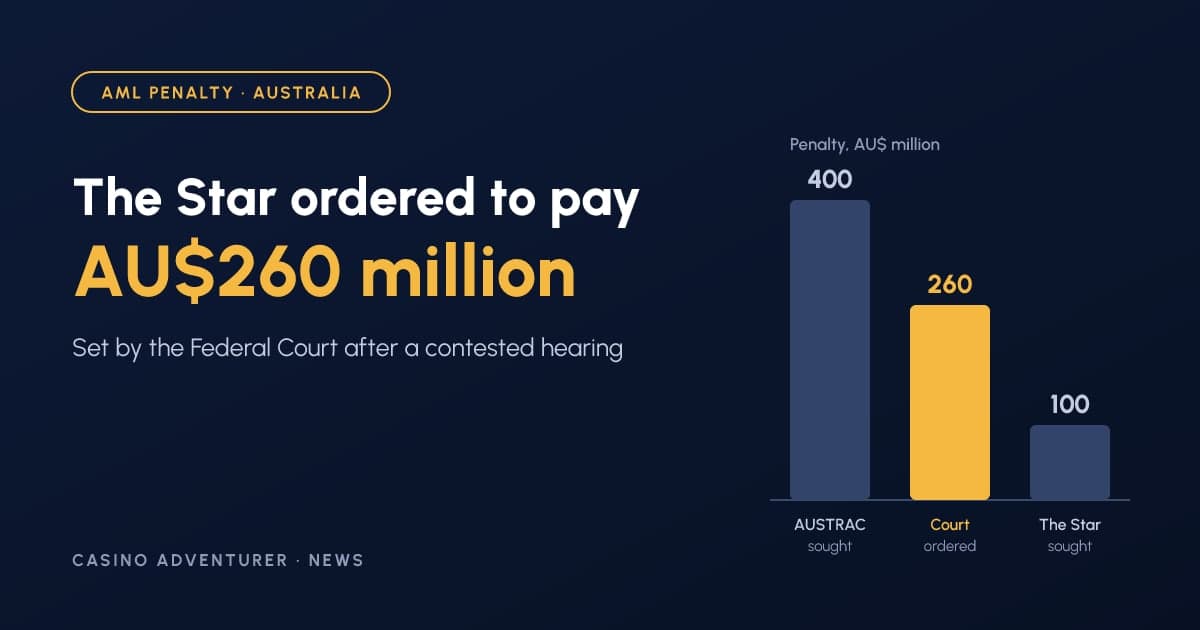
The Federal Court ordered The Star to pay AU$260 million for anti-money laundering failures, the first AUSTRAC penalty set after a contest.
Dutch Licensed Gambling Market Shrinks as Online Revenue Falls 21%
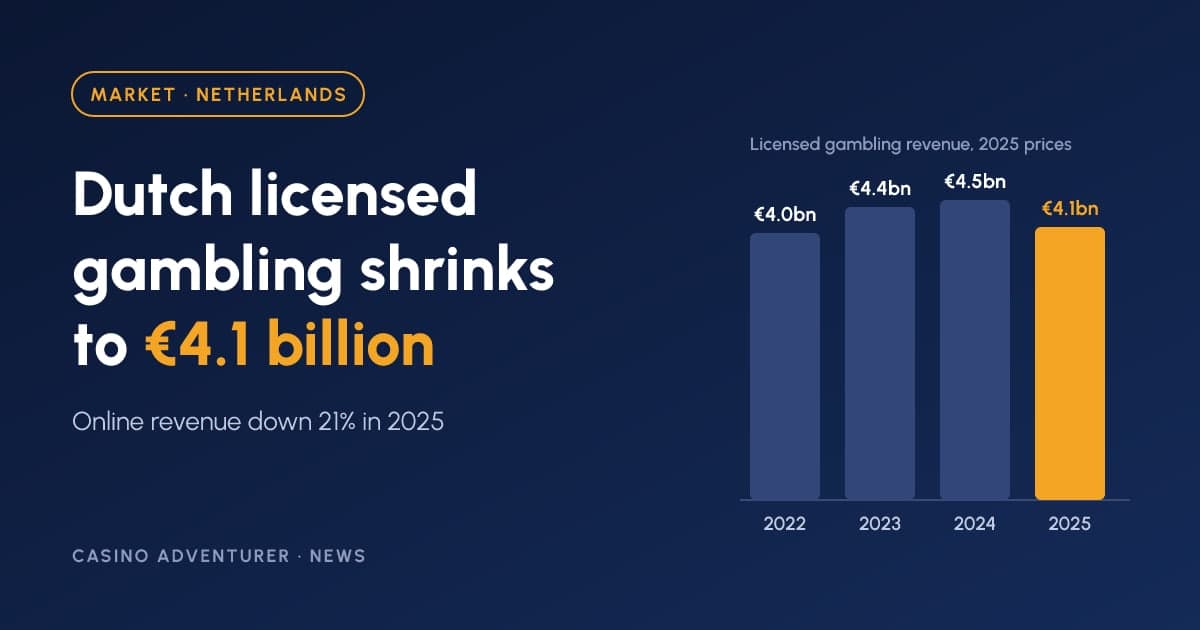
Licensed Dutch gambling took €4.1 billion in 2025 with online down 21%, and licensed sites held 59% of online spending in early 2026.