

How Fintech Is Reshaping iGaming Payments: Instant Withdrawals, Fraud Prevention, and the Road Ahead

From instant withdrawals to AI-driven fraud detection, fintech is fundamentally changing how online casino operators handle payments and protect players.

The Payment Gap That Fintech Closed
For years, the weakest link in the online casino experience was not the game library or the bonus structure. It was the cashier. Players deposited funds in seconds but waited days to see withdrawals land in their bank accounts, a mismatch that eroded trust and drew increasing scrutiny from regulators in multiple jurisdictions.
The old payout structure leaned heavily on legacy banking rails and manual approval queues. Compliance teams reviewed documents by hand, fraud checks ran sequentially rather than in parallel, and the money itself crawled through correspondent banking networks before reaching a player's account. The delay was structural, not accidental.
Fintech providers recognised this friction as an opportunity. By building direct account-to-account (A2A) payment infrastructure and embedding compliance checks into the transaction flow itself, companies began compressing withdrawal timelines from days to minutes. That shift has now become a competitive baseline rather than a premium feature.
Instant Withdrawals and the Rise of Open Banking
Open banking frameworks, particularly those shaped by Europe's Payment Services Directive (PSD2), gave fintech firms the regulatory foundation to build direct bridges between casino platforms and player bank accounts. Instead of routing funds through multiple intermediaries, A2A transfers move money along a shorter, faster path while retaining the audit trail regulators require.
Providers such as Trustly and Zimpler have scaled these models across European markets. Trustly reportedly recorded significant year-over-year growth in total payment value in 2024, which illustrates how quickly A2A infrastructure is being adopted by iGaming operators seeking faster settlement. Zimpler's Pay and Play model pairs real-time payments with built-in verification, allowing operators to meet KYC and AML standards without slowing down the onboarding process.
The practical result for players is that what once required 48 to 72 hours now often completes in under an hour, and in many cases within minutes. Some platforms have begun marketing themselves almost entirely around rapid cash-out capabilities, treating payout speed as a brand differentiator rather than a back-office metric.
It is worth noting that the term "instant withdrawal" is not always precise. In some cases, operators approve the request instantly while the final transfer speed still depends on the player's bank or chosen payment method. Regulatory requirements in certain jurisdictions can also introduce additional checks for larger amounts, particularly where enhanced due diligence is required.
Fraud Prevention Becomes a Payment-Layer Problem
The same velocity that makes instant payments attractive also creates new attack surfaces. When deposits, gameplay, and withdrawals all happen in real time, fraud rings can cycle through account takeover, bonus abuse, and payment fraud within a single session before detection systems respond. Industry estimates suggest that online gaming fraud jumped roughly 64 percent over a two-year period, and some research indicates that around 4 percent of platform logins may be takeover attempts.
Payment fraud in iGaming takes several distinct forms. Chargeback fraud involves a player depositing funds, placing bets, and then disputing the original transaction to reclaim the money. Synthetic identity fraud combines stolen personal data with fabricated details to bypass KYC checks and exploit payment systems. Money laundering through structured withdrawals is another documented concern, with criminals using high-value bets and frequent cash-outs to move illicit funds through gaming platforms.
Operators now face a difficult balance. Tightening fraud rules reduces financial exposure but risks generating false positives, where legitimate players are declined or delayed. In a market where players can switch platforms within seconds, a single wrongful block can permanently damage retention. The challenge is not simply stopping fraud but doing so without degrading the experience for the majority of genuine users.
Some estimates suggest that around half of all iGaming operators lose more than 10 percent of revenue to fraudulent activity, though figures vary across sources and market segments. Whatever the precise number, the financial and reputational cost is significant enough that fraud prevention has moved from a compliance checkbox to a core operational priority.
AI and Behavioural Analytics at the Cashier
The response from the industry has been to move fraud detection closer to the transaction itself. Rather than running static rule sets after the fact, modern platforms are deploying AI-driven behavioural analytics that assess risk in real time as a player deposits, plays, or requests a withdrawal. These systems analyse patterns across device fingerprints, IP addresses, session rhythms, and betting behaviour to assign dynamic risk scores.
Tools from providers including SEON, GeoComply, and CrossClassify are purpose-built for iGaming fraud vectors. They can detect multi-accounting by linking devices and digital footprints, identify bonus abuse by flagging abnormal signup-to-play patterns, and surface potential collusion through unusual win and loss distributions across connected accounts. The advantage over legacy rule-based systems is adaptability: machine learning models update as fraud tactics evolve rather than waiting for a human analyst to rewrite a rule.
KYC processes have also been transformed by the same technology. Biometric verification, document scanning, and liveness detection now run in the background during onboarding, reducing the time a legitimate player spends on identity checks while raising the barrier for fraudsters using synthetic identities. Automated AML screening and suspicious activity reporting help operators meet obligations set by regulators such as the UK Gambling Commission and the Malta Gaming Authority without introducing manual bottlenecks.
Payment Orchestration and the Multi-Provider Stack
As iGaming operators expand across multiple regulated markets, managing a single payment provider is rarely sufficient. Different jurisdictions favour different payment methods, currencies, and risk profiles. A sportsbook operating across several European countries may need to support local bank transfers, digital wallets, open banking rails, and cryptocurrency options simultaneously, each with its own compliance requirements and settlement timelines.
Payment orchestration platforms address this complexity by sitting above the individual provider layer and routing transactions intelligently. Operators can direct a deposit to the most appropriate acquirer based on the player's country, the transaction amount, the payment method, or a real-time risk assessment. If one provider declines a transaction, the orchestration layer can cascade to a secondary option automatically, recovering revenue that would otherwise be lost to a soft decline.
This infrastructure also consolidates reporting and reconciliation across providers, which simplifies the operational overhead of running a multi-market casino. For white-label and turnkey casino operators in particular, a centralised payment layer reduces the technical burden of connecting new markets and allows compliance controls to be applied consistently across the entire player base.
What Operators and Players Can Expect Next
The direction of travel in iGaming payments is toward further compression of friction at every stage of the player journey. Embedded finance concepts, where payment accounts are integrated directly into the gaming platform rather than sitting as a separate cashier step, are beginning to move from concept to early deployment. Stablecoins are being explored as a way to reduce cross-border settlement friction without the volatility associated with major cryptocurrencies.
Regulatory technology, often called RegTech, is also maturing alongside payment infrastructure. Automated compliance tools can now monitor transactions across jurisdictions, flag suspicious patterns for human review, and generate regulatory reports with minimal manual input. As frameworks like PSD3 take shape in Europe, providers that build compliance readiness into their core architecture are likely to offer operators a more stable path to scaling across borders.
For players, the practical outcome of all this investment is a cashier experience that increasingly resembles the speed and clarity of a modern banking app. Faster withdrawals, cleaner transaction histories, and background identity checks that do not interrupt gameplay are becoming the standard rather than the exception. Operators that fail to keep pace with these expectations face a straightforward competitive risk: players will move to platforms that have.
The convergence of fintech and iGaming is not a temporary trend driven by a single technology cycle. It reflects a structural shift in how online casino platforms are built, operated, and evaluated by both players and regulators. Payment infrastructure has moved from a back-office utility to a front-line differentiator, and the operators investing in it now are positioning themselves for the next phase of industry growth.

Daniel Kovacs is a seasoned online casino reviewer known for his analytical approach and no-nonsense writing style. With a background in digital marketing and a long-standing interest in probability and game mechanics, he built his reputation by breaking down complex casino systems into clear, practical insights for everyday players. He started his career freelancing for niche gambling blogs before launching his own review platform, where he focuses on transparency—testing bonuses, verifying payout speeds, and digging into terms that most players overlook. Daniel is particularly respected for his deep dives into slot RTPs, customer support responsiveness, and real user experiences.
More iGaming News
Read more
Netherlands Tightens Online Gambling Rules with Near-Total Ad Ban and Stricter Safeguards
The Dutch government is introducing sweeping new gambling rules, including a near-total ad ban, bonus restrictions, and a raised minimum age for online play.
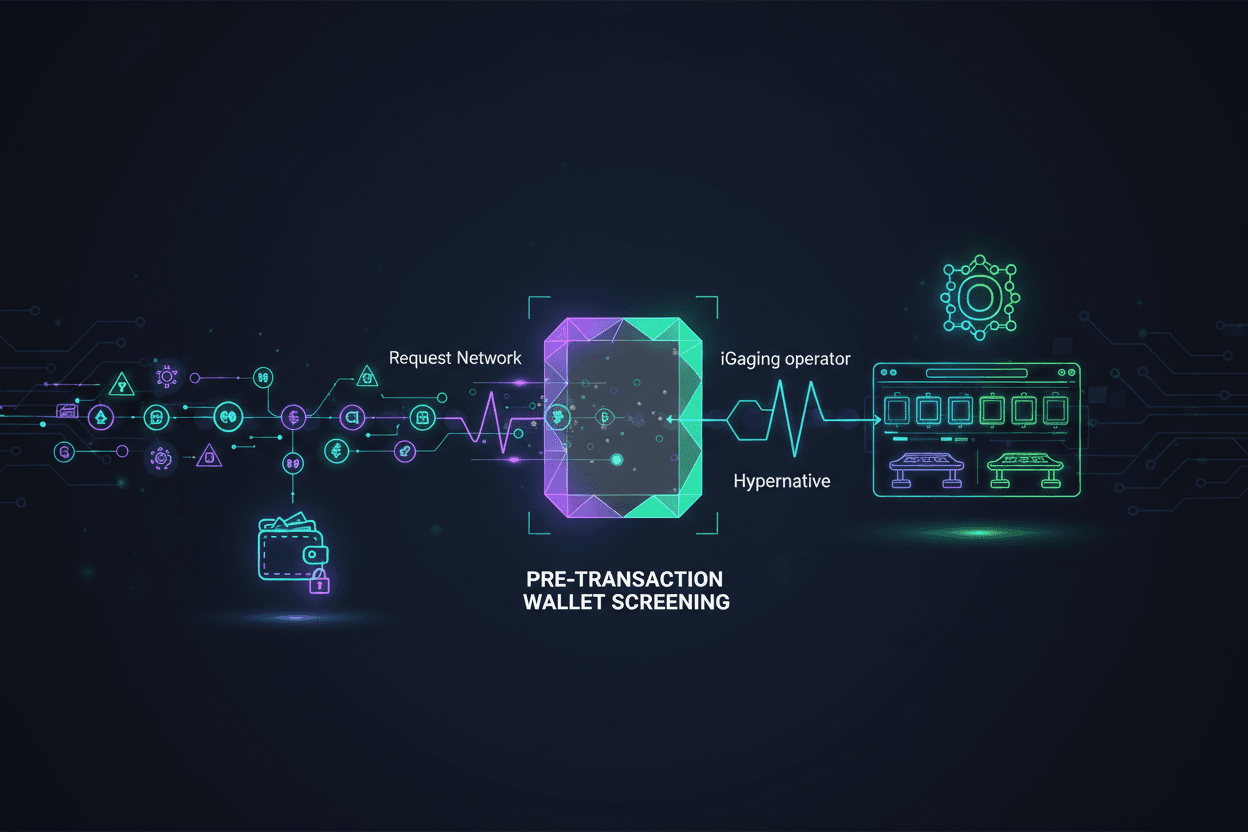
Request Network Brings Pre-Transaction Wallet Screening to iGaming Crypto Payments
Request Network launched cross-chain crypto payments with pre-transaction wallet screening for iGaming operators in June 2026, targeting fraud and compliance gaps.

MiCA's July 2026 Deadline Forces Crypto Casinos to Choose: Comply or Exit the EU
The EU's MiCA grandfathering period ends July 1, 2026, forcing crypto-accepting online casinos to obtain full CASP authorization or stop serving European players.